Best quiet air purifiers
Quick answer
The DREO purifier ($69.97), marketed at 20dB in sleep mode with a sensor and auto mode, is the pick for a quiet room, but that 20dB figure is measured at the lowest fan speed, not the speed required to actually deliver its rated 178 sq ft coverage.
Every decibel number on every purifier box in this roundup is measured at the lowest fan speed unless the listing says otherwise; treat it as a floor, not a promise.

DREO Air Purifier for Home, HEPA Sleep Mode, AHAM VERIFIDE Air Purifiers for Bedroom, Pets, Smoke, Dust, Pollen & Odors, PM2.5 Monitor, Auto & Turbo Mode, 4 Speeds, Scent Diffuser, DR-HAP008(Dreo 338)
It combines a real air quality sensor with an automatic mode, so it spends most of its time at that quiet lowest speed and only ramps up, and gets louder, when the sensor actually detects a spike in particulate.
Coverage claims vary in what air change rate they assume, so check a machine's published airflow against your own room rather than the room size on the box.
The three tiers
Beginner: Best quiet pick for a small room
Who it is for: a small bedroom or home office where a 20dB sleep-mode claim matters most
- Beginner pick
Air Purifier For Home Bedroom, 20dB Quiet Sleep Mode
- HEPA claimed
- carbon stage
$69.99 Check pricePrices change often

This purifier ($69.99) is marketed with a 20dB quiet sleep mode and true HEPA plus carbon filtration, sized for a smaller room where the lowest fan speed can often still meet the space's air change needs.
Not for: a larger room, where reaching a real air change rate will require a higher, louder fan speed than the advertised 20dB figure
Intermediate: Best quiet pick with a real sensor
Who it is for: a larger room where an automatic mode driven by an actual sensor matters more than a single quiet-mode number
- Intermediate pick
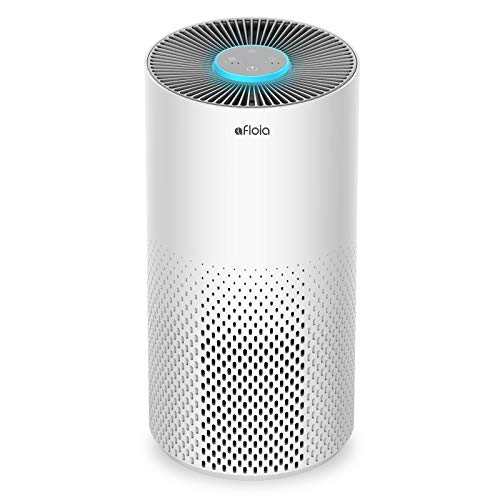
Afloia Smart Air Purifier for Home Large Room, Covers up to 2000 Sq Ft
- washable pre-filter
- particle sensor
- app or voice
$109.99 Check pricePrices change often

This Afloia unit ($109.99) advertises a 20dB sleep mode, is rated to 2,000 sq ft, and includes wifi and a real-time sensor, though its listing does not state true HEPA, which is worth weighing against its quiet-mode claim.
Not for: anyone who specifically wants a stated true HEPA claim over a quiet-mode marketing claim
Expert: Best honest decibel number for a large room
Who it is for: a large room that needs the airflow to actually reach 4 to 5 air changes an hour, not just a quiet sleep mode at minimum speed
- Expert pick
Hepa Air Purifiers for Home up to 3500 Ft2, 235 CADR, 30dB Quiet Operation
- HEPA claimed
- carbon stage
- auto mode
$229.99 Check pricePrices change often
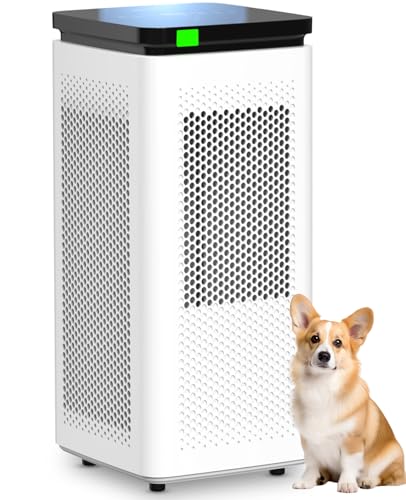
This unit ($229.99) is rated at 30dB for quiet operation while covering up to 3,500 sq ft with true HEPA and carbon filtration, a louder published number than the smaller units here, which is a more honest reflection of what it takes to move that much air.
Not for: a small room, where this much fan capacity is unnecessary and the higher published decibel figure is wasted caution
| Claim on the box | Speed it is almost always measured at | What it does not tell you |
|---|---|---|
| 20dB "sleep mode" or "quiet mode" | the lowest available fan speed | the noise level at the speed that delivers the rated coverage area |
| 30 to 40dB "normal" or "auto" | a mid-range speed, sometimes an average across settings | how often the auto mode actually runs at a higher, louder speed |
| 50dB+ "turbo" or "max" | the highest fan speed, which delivers the full rated CADR | this is usually the number closest to what the coverage claim assumes |
The gap between the quiet-mode number and the real operating number
Nearly every decibel figure printed on an air purifier box or listing is measured at the lowest fan speed, since that produces the smallest, most marketing-friendly number. That speed is frequently not the speed the manufacturer's own coverage claim assumes; a machine advertised at 20dB and rated to 2,000 sq ft is very unlikely to reach the air change rate behind that 2,000 sq ft claim while running at its quietest setting.
This is not dishonest labeling in the sense of a false number, since the 20dB figure is usually real at that specific speed. It is incomplete information, because the speed matters as much as the decibel reading, and the two are rarely both disclosed together.
Why an automatic mode with a real sensor changes this equation
A machine with a genuine particulate sensor and an automatic mode spends most of its time at a lower speed when the air is actually clean, and only shifts to a higher, louder speed when the sensor detects a real spike. That means the quiet-mode number is a more honest reflection of typical operating noise for a sensor-equipped machine than for one running a single fixed speed all the time.
A machine without a sensor, set manually to a low speed for the sake of quiet, is not adjusting to actual air quality at all; it is simply moving less air, all the time, regardless of what is in the room.
Bigger rooms mean louder machines at the speed that actually works
Required airflow in CFM scales directly with floor area: floor area times ceiling height times air changes per hour, divided by 60. A machine sized for a large room has to move meaningfully more air per minute than one sized for a bedroom, and moving more air per minute, mechanically, takes a bigger fan or a faster motor, both of which raise noise at the speed that actually delivers that airflow.
This is why the 30dB expert-tier pick above, rated to 3,500 sq ft, is not a worse quiet purifier than the smaller 20dB units; it is doing more air-moving work, and its higher published number is arguably the more honest one relative to what it is actually built to deliver.
What to actually check before trusting a quiet claim
Look for whether the listing states the fan speed the decibel figure was measured at; a listing that says "20dB on sleep mode" is more useful than one that just says "20dB" with no speed named. Owner reports describing actual overnight or daytime use, rather than the manufacturer's own quoted figure, are often the more reliable read on real operating noise at a normal, non-minimum setting.
A listing that also states a decibel figure at its highest or "turbo" speed, alongside the quiet-mode number, is giving a more complete picture than one that only publishes the lowest number; the gap between those two figures is a rough guide to how much louder the machine gets when it is actually working to hit its rated coverage.
True HEPA versus a quiet-mode marketing claim
Not every unit chasing a low decibel number for marketing purposes states true HEPA on its listing filtration; the Afloia unit in the intermediate tier above advertises 20dB sleep mode and wifi control but does not state true HEPA on its listing, which is a real tradeoff to weigh against a machine that does state it but is potentially louder alternative. Quiet operation and filtration quality are two separate specifications, and a strong number on one says nothing about the other.
The beginner and expert tiers on this page, by contrast, both state true HEPA on their listings alongside their quiet-mode or higher-airflow claims, which is worth checking on any quiet-marketed unit before assuming a low decibel number and strong filtration always come together.
None of this changes what a purifier can promise
A quiet purifier reduces measured airborne particulate at whatever speed it is actually running; it does not treat or prevent allergies, asthma, or any other condition regardless of how low its decibel rating reads. Choosing a quiet machine is about comfort and sleep, not a therapeutic claim the listing or this page is making.
None of the three picks on this page run an ionizer or UV mode, so the noise and filtration discussion here is entirely about fan speed and HEPA media, not an added technology that would also need an ozone caveat attached to it.
How we chose
These picks come from published manufacturer decibel and coverage claims and owner reports describing real operating noise at normal, not minimum, fan speeds, not in-person sound measurement of our own.
Preference went to machines with a real sensor and automatic mode over a fixed quiet setting, and the largest-capacity pick was included specifically to show how a higher published decibel number can still be the more honest figure for its coverage class.
Buying tips
Is a lower decibel number always the quieter real-world machine?
Not necessarily. Compare the speed each number was measured at; a 20dB figure at minimum speed can be less informative than a 30dB figure disclosed at the speed that actually delivers the machine's rated coverage.
Does an automatic sensor mode actually reduce noise, or just change when it happens?
Both. It reduces average noise over time by running at a lower speed whenever the air is clean, while still being able to ramp up briefly when the sensor detects a real spike, rather than running loud constantly or quiet constantly regardless of conditions.
Should I size down for the sake of quiet?
Sizing down lowers the required fan speed for the same air change rate, but only if the smaller machine is not then overworked in a room larger than it is rated for, which produces the opposite result: a louder machine running near its maximum just to keep up.
Where should a quiet purifier be placed to minimize noise?
A few feet from where someone sits or sleeps, on a hard, stable surface rather than one that vibrates, and away from walls that could reflect fan noise back into the room, following the same general placement guidance as any purifier.
Other options worth knowing about
- MOOKA
MOOKA H13 HEPA Air Purifier for Home Pet Large Room Up to 1300ft2, Black
- HEPA claimed
- carbon stage
- has a UV lamp
$46.98 Check pricePrices change often - MOOKA
MOOKA Air Purifiers for Home Room up to 1076ft2, True HEPA Filter, B-D02L
- HEPA claimed
- carbon stage
$49.99 Check pricePrices change often - MOOKA
MOOKA Air Purifiers for Home Room up to 1076ft2, True HEPA Filter, B-D02L
- HEPA claimed
- carbon stage
$49.99 Check pricePrices change often - Clorox
Clorox Small Room Air Purifiers for Bedroom Home, True HEPA Filter
- HEPA claimed
$59.95 Check pricePrices change often - Afloia
Afloia Air Purifier for Home Bedroom Large Room up to 1500 Sq Ft
- washable pre-filter
$59.97 Check pricePrices change often


Common questions
What is the quietest air purifier for a bedroom?
The DREO purifier ($69.97), marketed at 20dB in sleep mode with a real sensor and automatic operation, is the pick, since the sensor lets it spend most of the night at that lower speed rather than running a single fixed, louder setting all night regardless of actual air quality in the room.
Why is a purifier's decibel rating usually measured at the lowest speed?
Because that speed produces the smallest, most marketing-friendly number for the box or listing, which sells better than a higher, more honest figure. It is a real measurement at that specific speed, but it is rarely the speed the manufacturer's own coverage or CADR claim assumes, which is usually a higher, louder setting entirely.
Does a bigger, louder-rated air purifier mean worse quiet performance?
Not necessarily. A larger-capacity machine moves more air to hit the same air change rate across more square footage, which mechanically requires more fan noise at the speed that actually delivers it. A higher published decibel number on a large-capacity unit can be a more honest figure than a low number on a smaller machine measured at minimum speed.
Should I trust the decibel number on the box?
Trust it as a real measurement at whatever speed it names, if a speed is named at all. Where no speed is disclosed, assume it is the lowest available setting, and check owner reports describing actual noise at a normal operating speed, not the manufacturer's own quoted figure, for a more complete picture of daily use.
Does an automatic mode make a purifier quieter overall?
Yes, in practice, since it runs at a lower speed by default and only increases speed, and noise, when a real sensor detects a spike in particulate, rather than running at one fixed speed continuously regardless of actual air quality throughout the day and night in the room where it sits.
Is true HEPA less common in purifiers marketed as quiet?
Not inherently, but quiet-focused marketing and a stated true HEPA specification are two separate claims, and some quiet-marketed units skip a stated true HEPA claim in favor of other selling points like wifi or app control. Check both specifications separately on the listing rather than assuming one automatically implies the other one entirely on any given model.