Best air purifiers for a bedroom
Quick answer
For a bedroom between 100 and 250 sq ft, the Momcozy air purifier ($99.99) is the pick: it is rated to 250 sq ft, includes a true HEPA and carbon stage, and its auto mode keeps fan speed, and noise, down overnight rather than running at a fixed loud setting.
A bedroom purifier lives or dies on the noise it makes at the speed that actually delivers its rated airflow, not the lowest number on the box.
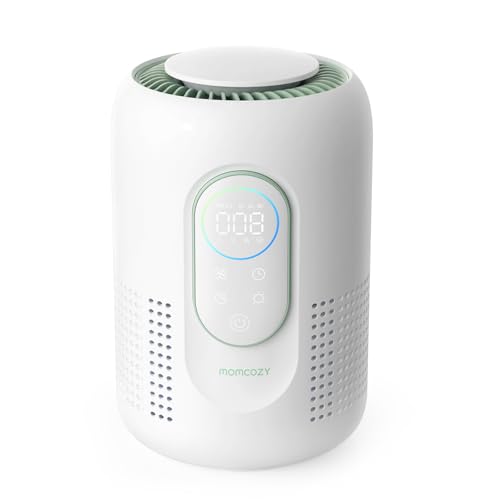
Momcozy Air Purifier for Bedroom with Dimmable Night Light for Small Room
It is rated to 250 sq ft with true HEPA and carbon filtration, and its auto mode uses a lower fan speed overnight when demand is lower, which is the more honest way to judge a bedroom machine than its single lowest published decibel figure.
Coverage claims vary in what air change rate they assume, so check a machine's published airflow against your own room rather than the room size on the box.
The three tiers
Beginner: Best value for a standard bedroom
Who it is for: a bedroom around 150 sq ft on a budget under $100

The GermGuardian AC4825 ($80.74) is rated to 153 sq ft with true HEPA and carbon filtration, carries an ozone-free claim on its listing, and its replacement filter runs $19.88.
Not for: a primary bedroom over 200 sq ft, where its rated coverage starts to run thin
Intermediate: Best compact option for a smaller bedroom
Who it is for: a smaller bedroom, dorm room, or guest room around 100 to 150 sq ft where a compact footprint matters
- Intermediate pick
BLUEAIR Air Purifiers for Small Spaces Bedroom Dorm Office, Mini Max Auto
- carbon stage
- auto mode
$79.99 Check pricePrices change often

The Blueair Mini Max Auto ($79.99) is rated to 105 sq ft with an auto mode built around HEPASilent technology, a proprietary approach rather than a listing that states true HEPA.
Not for: anyone who specifically wants a stated true HEPA claim on the spec sheet rather than a proprietary filtration claim
Expert: Best for a nursery or light sleeper
Who it is for: a nursery or a bedroom belonging to someone especially sensitive to fan noise
- Expert pick
LEVOIT Smart Air Purifier for Home Bedroom, Quiet for a Nursery, Sprout
- HEPA claimed
$199.99 Check pricePrices change often

The LEVOIT Sprout ($199.99) is marketed specifically around quiet nursery operation with true HEPA filtration, at a higher price than the other two tiers for that quieter operating profile.
Not for: a budget purchase, since it costs roughly double the beginner tier for a quieter operating profile rather than more coverage
| Bedroom size | CFM at 4 air changes an hour | CFM at 5 air changes an hour |
|---|---|---|
| 100 sq ft | 53 CFM | 67 CFM |
| 150 sq ft | 80 CFM | 100 CFM |
| 200 sq ft | 107 CFM | 133 CFM |
| 250 sq ft | 133 CFM | 167 CFM |
Why noise, not coverage, decides a bedroom purifier
A bedroom purifier runs for eight or more hours next to someone trying to sleep, which makes the decibel figure at its actual operating speed more important than in almost any other room. The number printed on most boxes is measured at the lowest fan speed, which is frequently not the speed needed to deliver the machine's rated CFM.
A machine with an automatic mode and a real sensor, rather than a fixed speed dial, spends most of the night running quieter because it only ramps up when the air actually needs it, which is a meaningfully different experience than a machine stuck on a single loud setting all night.
The arithmetic behind bedroom sizing
Required airflow in CFM equals floor area multiplied by ceiling height multiplied by air changes per hour, divided by 60. Five air changes an hour is guidance commonly used for allergy-sensitive households; 4 air changes an hour is a reasonable target for a household without specific sensitivities, and it produces a lower, quieter CFM requirement across every bedroom size in the table above.
The two thirds rule, an 8 foot ceiling and 5 air changes an hour baked into one shopper convention, is the same arithmetic as the 5 air change column above; it is not a separate calculation, just a pre-filled version of it.
True HEPA versus proprietary filtration claims
True HEPA is defined as capturing 99.97 percent of particles at 0.3 microns in a single pass, a specific, checkable claim. Some bedroom units, including the Blueair Mini Max in the tier above, use proprietary filtration technology marketed under its own name rather than a true HEPA rating stated on the listing, which is not automatically worse, just a different, less standardized claim to evaluate.
None of this is a claim about symptoms. A bedroom purifier reduces measured airborne particulate in the room; it does not treat or prevent allergies, asthma, or any other condition, whichever filtration approach it uses.
Ozone and UV modes in bedroom-class machines
The GermGuardian AC4825 above includes a UV-C mode alongside its true HEPA stage, and its listing carries an ozone-free claim. Where a bedroom machine includes a UV or ionizer mode, the safer approach overnight is to switch it off and let the true HEPA filter do the actual particle removal, since ionizer and some "active" technologies emit ozone as a by-product and California's CARB program regulates devices specifically on that point.
None of the other two tiers on this page run a UV or ionizer mode at all; the Momcozy top pick and the Blueair Mini Max rely on their filtration stage alone. That is worth knowing before assuming every bedroom purifier needs this same caveat.
Placement changes what a bedroom purifier can actually deliver
A machine boxed in behind a nightstand or against a wall pulls in less air on its intake side and pushes clean air into a smaller effective space, which lowers its real-world performance well below its rated CFM regardless of which filter it uses. A few feet of open space around the intake and outlet matters more in a bedroom than in a larger room, since bedroom furniture layouts tend to be tighter.
A closed bedroom door actually helps a purifier in this one specific case, since it keeps the treated air contained in the same volume the machine was sized for instead of letting it mix with the rest of the house and dilute the air change rate the calculation assumed.
Filter cost for a machine that runs all night, every night
A bedroom purifier that runs continuously overnight puts more hours on its filter per week than a machine used occasionally in a living room, which can shorten the practical replacement interval below the manufacturer's stated schedule. The GermGuardian's $19.88 filter keeps that ongoing cost low; check the specific replacement filter price for any bedroom machine before assuming a low upfront cost stays low.
The LEVOIT Sprout and Blueair Mini Max in the tiers above do not have a matching replacement filter listed in the same catalog as their base unit, which is worth confirming with the manufacturer directly before buying if long-term filter cost is a deciding factor for a bedroom purchase.
How we chose
These picks come from published manufacturer specifications, listing claims including ozone-free statements, and owner reports describing overnight noise and sleep experience, not in-person testing in our own bedrooms.
Preference went to machines with an automatic sensor mode over a fixed speed dial, since overnight noise at the operating speed matters more for a bedroom pick than for almost any other room in the house.
Buying tips
Should I buy the loudest-rated CADR I can afford for a bedroom?
Not necessarily. A bedroom benefits more from an automatic mode that runs quiet most of the night than from raw maximum airflow that is rarely needed while someone sleeps.
Where should a bedroom purifier actually sit?
A few feet from the bed and away from walls or furniture that block its intake and outlet, roughly following the placement guidance used for any room, works better than tucking it into a corner.
Is true HEPA worth paying more for in a bedroom?
For most households, yes, since it is a certified, checkable claim rather than a proprietary one. It matters less if the household has no particular sensitivity and mainly wants general dust reduction.
Does a nursery need a different purifier than a regular bedroom?
The filtration requirement is the same; the difference is usually a stronger emphasis on low noise at the operating speed and a compact footprint, since nursery furniture layouts tend to be tight.
Other options worth knowing about
- Frida
Frida Baby 3-in-1 Air Purifier, Sound Machine + Nightlight, Auto-Off Timer
- HEPA claimed
$59.97 Check pricePrices change often - Levoit
Levoit Air Purifier for Home Pets Bedroom Dorm Room, Smart & Voice Control
- carbon stage
$69.99 Check pricePrices change often - Levoit
Levoit Air Purifier for Home Pets Hair Allergens in Bedroom Quiet Purifiers
$84.98 Check pricePrices change often


Common questions
What is the best air purifier for a bedroom?
The Momcozy purifier ($99.99), rated to 250 sq ft with true HEPA and carbon filtration and an auto mode, is the strongest overall pick for a standard bedroom, since its automatic speed control keeps noise down overnight rather than running at a single fixed, louder setting all night regardless of actual air quality.
How loud should a bedroom air purifier be at night?
The number that matters is the decibel level at the speed the machine actually runs while asleep, not its lowest published figure, which is usually measured at minimum fan speed. A machine with an automatic sensor mode spends more of the night at a quieter speed than a fixed-speed unit.
What air change rate is right for a bedroom?
4 to 5 air changes an hour is common guidance, with 5 typically reserved for allergy-sensitive households and 4 reasonable for everyone else without specific sensitivities. This is guidance, not a published standard the way AHAM AC-1 or ASHRAE 52.2 are, and a lower target produces a smaller, quieter, cheaper machine for the same bedroom floor area.
Is true HEPA necessary for a bedroom purifier?
True HEPA is a certified claim, capturing 99.97 percent of particles at 0.3 microns in a single pass, which makes it easier to compare across brands than a proprietary filtration technology marketed under its own name. It is not strictly required for general use, but it is the more checkable, standardized claim to look for when comparing bedroom units.
Can I leave a bedroom purifier's UV or ionizer mode on overnight?
Where the mode can be switched off, doing so and relying on the true HEPA stage is the more cautious choice, since ionizer and some active technologies emit ozone as a by-product of how they generate charged particles, which California's CARB program specifically regulates for indoor air cleaning devices sold for occupied rooms.
Where should I put an air purifier in a bedroom?
A few feet away from the bed, with open space around both the intake and the outlet, delivers closer to the machine's rated CFM than tucking it against a wall or behind furniture, which restricts airflow on both sides and lowers real-world performance well below the printed specification on the box.