Air purifier noise levels explained
Quick answer
The decibel figure printed on most air purifier listings is measured at the lowest fan speed, often called sleep mode, while the fan speed required to deliver the machine’s full rated CADR is meaningfully louder and is rarely the number advertised.

BLUEAIR Air Purifiers for Small Spaces Bedroom Dorm Office, Mini Max Auto
This unit is listed at 19 decibels, among the quietest figures in the catalog, and it is worth checking whether that number is stated for its lowest speed or across its full speed range before assuming it stays that quiet at the speed needed to actually hit a target CADR.
Coverage claims vary in what air change rate they assume, so check a published airflow figure against your own room rather than the room size on the box.
| Decibel level | Comparable to | What it means for sleep |
|---|---|---|
| 19 to 25 dB | A quiet library or soft whisper | Generally unnoticeable for sleep |
| 25 to 35 dB | Quiet conversation, a soft rain | Noticeable but tolerable for most sleepers |
| 35 to 50 dB | Normal conversation, an office | Likely to disturb light sleepers at close range |
| Above 50 dB | A running dishwasher or vacuum on low | Not a realistic overnight bedroom speed for most people |
Why the box number is almost always the quietest speed
Most air purifier listings feature a single decibel figure prominently, and that figure is typically measured at the machine’s lowest fan speed, sometimes labeled sleep mode. This is the speed at which the machine is genuinely quiet, and it is also, by design, the speed that moves the least air and delivers the smallest fraction of the unit’s rated CADR.
A listing showing "19 dB" without specifying which speed that reading was taken at is very likely describing the lowest setting, not the speed the machine runs at to actually clear a room at its full rated air changes per hour.
A small number of listings do disclose a per-speed decibel breakdown, sometimes as a small table in the product images rather than the main description text, listing a figure for each of a machine’s low, medium, and high or turbo settings. Where this breakdown exists, it is worth reading in full rather than stopping at the single headline number most shoppers see first, since the gap between the lowest and highest figures is exactly the information a single decibel rating hides.
The speed that delivers the rated CADR is a separate, louder number
A machine’s rated CADR, the CFM figure used for sizing under `/guides/how-to-size-an-air-purifier/`, is typically measured at a higher fan speed than the quiet, sleep-mode setting the decibel figure is drawn from. Running the same machine at that higher speed, needed to actually hit the sizing target ACH for its rated coverage, produces meaningfully more noise than the number printed next to "quiet operation" on the box.
When both a decibel rating and a decibel-per-speed breakdown are available in a listing or manual, the top-speed figure is the more honest number for predicting how the machine will actually sound when running hard enough to clear a larger or more challenging room.
This gap between the quiet-speed and full-CADR-speed noise levels tends to be wider on smaller, less efficient fan and motor designs than on larger, more refined ones, since a bigger fan can often move the same volume of air at a lower rotational speed than a smaller fan straining to produce the same airflow. This is one reason a larger, well-engineered unit sometimes runs quieter at its effective working speed than a smaller unit advertised with a lower headline decibel number.
Decibels are logarithmic, not linear
The decibel scale is logarithmic: an increase of 10 decibels represents roughly a tenfold increase in sound intensity, and even a 3 decibel increase represents a doubling of sound energy, though the perceived loudness increase feels smaller than that to human hearing. A jump from a 25 dB sleep speed to a 45 dB top speed is a far larger real difference than the raw 20-point gap suggests at a glance.
This matters when comparing two units where one advertises "25 dB" and another advertises "28 dB": a 3 decibel difference sounds minor on paper but represents a real, audible difference in sound energy, and it is worth checking whether both figures were measured at comparable fan speeds before treating them as directly comparable.
The logarithmic scale also explains why running two purifiers in the same room does not simply double the perceived noise. Two identical units each producing 30 decibels running together produce roughly 33 decibels combined, not 60, because decibel values add logarithmically rather than arithmetically. This is useful context for a household considering two smaller units instead of one large one for a big or oddly shaped room, covered in `/guides/how-to-size-an-air-purifier/`: the combined noise increase is smaller than a simple doubling would suggest.
What actually affects noise beyond the fan speed setting
A clogged filter increases airflow resistance, which can make a fan work harder and run louder at the same speed setting than it did with a clean filter, tying noise indirectly back to the filter maintenance covered in `/guides/how-often-to-change-a-filter/`. Placement also plays a role: a unit pushed against a hard wall or into a corner can produce more perceived noise from reflected sound than the same unit in open floor space, separate from the mechanical noise the fan itself produces.
The surface a unit sits on also affects perceived noise, sometimes more than people expect: a purifier on a hard floor can transmit low-frequency motor vibration into the floor itself, adding a faint hum or buzz that is not part of the fan noise the decibel rating describes at all. Placing a unit on a soft mat or rug, where floor space allows, can measurably reduce this transmitted vibration noise without affecting the machine’s airflow or CADR in any way.
Choosing a purifier for a bedroom based on realistic noise
For overnight bedroom use, checking the decibel figure at the speed the room actually needs to hit its target ACH, not just the lowest sleep-mode number, gives a more realistic sense of what a night will actually sound like. A unit sized with some headroom above the strict minimum CADR requirement, covered in `/guides/how-to-size-an-air-purifier/`, can often run at a lower, quieter speed while still delivering the target air change rate, which is frequently a better path to a quiet night than chasing the single lowest decibel number on a spec sheet.
A useful mental substitution for anyone shopping specifically for a nursery or a light sleeper’s bedroom: treat the decibel figure the same way the coverage claim gets treated elsewhere on this site, as a number that needs its assumed operating condition disclosed before it can be trusted. A machine that is quiet only at a fan speed too low to hit the room’s target ACH has not actually solved the noise problem; it has just moved the tradeoff from noise to under-filtered air.
Why decibels alone do not capture how annoying a sound feels
A decibel measurement describes sound pressure level, not the character of the sound itself, and two purifiers reading the same decibel figure can feel meaningfully different to sit near. A steady, broadband whoosh of moving air is generally less noticeable and less fatiguing over hours of exposure than a sound of the same decibel level that carries a distinct tonal whine or an audible clicking from a motor, sensor, or loose internal part.
This is why owner reports describing a specific model as "quieter than its decibel rating suggests" or "louder-feeling than the number implies" are describing something a single decibel figure cannot capture on its own. Where available, a specification sheet or manual that mentions the type of fan motor used, brushless DC designs are commonly associated with smoother, less tonal operation than cheaper AC motors, adds a layer of information the bare decibel number does not provide.
Equipment mentioned on this page
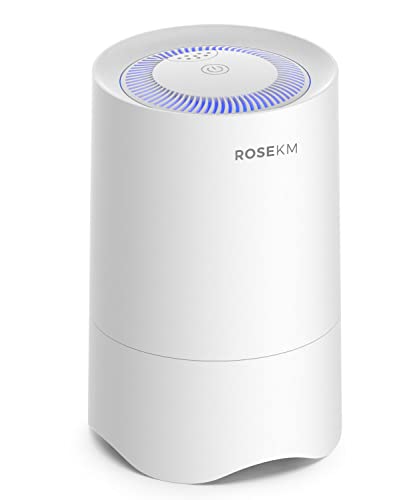
- Rosekm
ROSEKM Small Air Purifier for Bedroom & Desk, 50 Sq Ft, H13 HEPA, White
- HEPA claimed
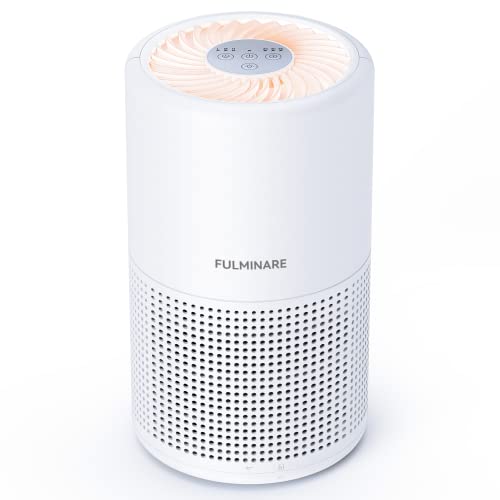
$19.99 Check pricePrices change often - FULMINARE
Air Purifiers for Bedroom, FULMINARE H13 True HEPA Filter
- HEPA claimed
$24.99 Check pricePrices change often - Homedics
Homedics Personal Air Purifier with HEPA-Type Filter & Activated Carbon
- carbon stage
$34.99 Check pricePrices change often - Pure Enrichment
Pure Enrichment PureZone Mini Portable Air Purifier
- HEPA claimed
- carbon stage
$39.99 Check pricePrices change often


Common questions
Is the decibel rating on an air purifier listing measured at full speed?
Usually not. Most listings state the decibel figure at the lowest fan speed, often labeled sleep mode, which is the quietest but also the lowest-airflow setting. The speed needed to deliver the machine’s full rated CADR is typically louder than the number advertised on the box.
What decibel level is quiet enough for sleeping?
Figures in the roughly 19 to 25 decibel range are generally unnoticeable for most sleepers, comparable to a quiet library or a soft whisper. Above about 35 decibels starts to approach normal conversation level, which is more likely to be noticeable overnight, particularly for light sleepers.
Why does my purifier get louder over time at the same speed setting?
A clogged or heavily loaded filter increases airflow resistance, which can make the fan work harder and produce more noise at an unchanged speed setting compared to when the filter was new. This is one of the practical signs, alongside reduced airflow, that a filter needs replacing.
Is a 3 decibel difference between two purifiers significant?
Yes, more than it appears. The decibel scale is logarithmic, and a 3 decibel increase represents roughly a doubling of sound energy, even though it may not sound twice as loud to human hearing. A 3 decibel gap is a real, measurable difference, not a rounding error.
Does placement affect how loud a purifier sounds?
Yes. A unit placed against a hard wall or wedged into a corner can produce more perceived noise from reflected sound than the same unit in open floor space, independent of the fan’s own mechanical noise output. `/guides/where-to-place-an-air-purifier/` covers placement more broadly.
Should I buy a bigger purifier to run it quieter?
Often, yes. A unit sized with some headroom above the strict minimum CADR needed for a room can run at a lower fan speed while still hitting the target air changes per hour, which is frequently quieter overall than a smaller, minimally sized unit forced to run near its top speed for the same result.