Best air purifiers under $100
Quick answer
The MOOKA H13 ($46.98) is the best air purifier under $100: true HEPA with carbon filtration, rated to 1,300 sq ft, and its $17.98 replacement filter keeps the five-year cost of ownership under $140, the lowest of any unit in this bracket.
The unit price is only half the number that matters under $100; the filter price times how many times you replace it decides whether a cheap machine stays cheap.

MOOKA H13 HEPA Air Purifier for Home Pet Large Room Up to 1300ft2, Black
At $46.98 up front and $17.98 per replacement filter, it has both the lowest purchase price and the lowest recurring cost of any true HEPA purifier under $100 in this catalog, which is what actually makes a cheap machine cheap over years, not just at checkout.
Coverage claims vary in what air change rate they assume, so check a machine's published airflow against your own room rather than the room size on the box.
The three tiers
Beginner: Best for a small room with no odor concerns
Who it is for: a small room where general dust reduction matters more than cooking or pet odor
- Beginner pick
Clorox Small Room Air Purifiers for Bedroom Home, True HEPA Filter
- HEPA claimed
$59.95 Check pricePrices change often

The Clorox Small Room purifier ($59.95) is true HEPA rated to 80 sq ft, and its replacement filter runs $19.66, keeping recurring cost low, though it has no carbon layer for odor.
Not for: anyone dealing with pet odor or cooking smells, since there is no activated carbon stage to handle gases and odor
Intermediate: Best balance of price, quiet and odor control
Who it is for: a small to medium room that wants carbon filtration for odor plus a quiet automatic mode

The DREO purifier ($69.97) is rated to 178 sq ft with a sensor, automatic mode, and carbon filtration for odor, and its replacement filter runs $22.99.
Not for: anyone who wants the absolute lowest five-year cost, since both its unit price and filter price sit above the top pick
Expert: Best at the top of the under-$100 bracket
Who it is for: a bedroom or home office up to about 150 sq ft that wants the most established brand in this price range

The GermGuardian AC4825 ($99.99) is true HEPA with carbon and a switchable UV-C mode, rated to 153 sq ft, and its $19.88 filter is one of the cheapest in this entire roundup despite the unit sitting at the top of the price bracket.
Not for: a strict budget, since it is the most expensive unit price of the four picks on this page even though its filter cost is low
| Purifier | Unit price | Filter price x 5 years | 5 year total |
|---|---|---|---|
| MOOKA H13 | $46.98 | $17.98 x 5 = $89.90 | $136.88 |
| Clorox Small Room | $59.95 | $19.66 x 5 = $98.30 | $158.25 |
| DREO purifier | $69.97 | $22.99 x 5 = $114.95 | $184.92 |
| GermGuardian AC4825 | $99.99 | $19.88 x 5 = $99.40 | $199.39 |
Why the sticker price is only half the story under $100
A replacement filter is a recurring purchase, and under $100 the gap between the cheapest and most expensive unit price is small enough that the filter cost over time can matter more than which machine costs less at checkout. The table above assumes one filter change per year as a common, moderate-use guidance figure, not a specific manufacturer-stated interval for any one of these models.
Heavier use, pets, smoking, or a dusty renovation nearby can push actual filter changes to twice a year or more, which would roughly double the filter column in that table and widen the gap between the cheapest and most expensive options even further.
How the five-year total was built
Each row adds the unit price once to five years of filter changes at the current catalog filter price for that specific model, at an assumed one change per year. This is a simplification meant to compare relative recurring cost across models, not a guarantee of how often any specific household will need to change a filter, which depends on actual use and air quality conditions.
The MOOKA H13 wins on both ends: the lowest unit price of the four at $46.98, and the lowest filter price at $17.98, which is why its five-year total comes in noticeably below the others despite a nearly $53 gap between it and the most expensive unit price in the group.
What you give up at the cheap end that is not about filtration
Three of the four picks on this page state true HEPA on their listings. The DREO states HEPA sleep mode rather than true HEPA, which is a real difference in what has been claimed. What changes is coverage area, from 80 sq ft on the Clorox unit up to 1,300 sq ft on the MOOKA, and features like an automatic sensor mode, wifi, or a switchable UV-C stage, which the cheapest unit in this group does not include.
None of that changes the health claim boundary: all four reduce measured airborne particulate in the room; none of them treat or prevent allergies, asthma, or any other condition, regardless of price or feature set.
Why a $1,300 sq ft coverage claim on a $46.98 machine is not a mistake
The MOOKA's coverage claim assumes a specific, and likely low, air change rate at that maximum size; a $46.98 machine is not delivering the same real airflow as a $349.00 large-room unit just because both carry big square footage numbers. In a small or medium room well under that rated maximum, the same machine can comfortably reach 4 to 5 air changes an hour while running at a lower, quieter fan speed, which is where its low price actually pays off.
This is the same arithmetic that applies at every price point: required CFM equals floor area times ceiling height times air changes per hour, divided by 60. A large rated maximum on a cheap machine simply means there is more headroom left over once it is placed in a smaller room than the box implies it is built for.
Ozone and UV features at the low end
The MOOKA H13 in this roundup includes a UV mode alongside its true HEPA and carbon stage, and the GermGuardian AC4825 does as well, with an ozone-free claim on its listing. Where either mode is present, switching it off and relying on the true HEPA filter is the more cautious choice, since ionizer and some active technologies emit ozone as a by-product, which California's CARB program regulates specifically for indoor air cleaning devices.
The Clorox and DREO picks on this page do not include a UV or ionizer mode at all, relying on true HEPA and, in the DREO's case, carbon filtration alone, which is worth knowing if avoiding that extra mode entirely is a priority over price.
When paying more than $100 actually makes sense
Once a room exceeds roughly 250 to 300 sq ft, or a household specifically wants AHAM Verifide certification, a real-time sensor, or a five-year filter design, the picks in this under-$100 bracket start to run out of headroom, and the picks in the full best air purifiers roundup on this site cover that next price tier.
A household that has already priced out the five-year cost of a cheap unit and finds it close to a pricier one with better features may find the pricier machine the better value once wifi control, a sensor, or a longer filter life is factored in, not just the sticker price at checkout.
How we chose
These picks come from published manufacturer specifications and current catalog filter prices, not in-person testing or measured filter longevity of our own. The one-change-per-year assumption in the cost table is stated plainly as guidance, not a manufacturer-published replacement interval for any specific model.
Preference went to a stated true HEPA specification across every pick regardless of price, and to a documented, currently available replacement filter with a real price, since a cheap machine with no clear filter cost is not something this page could honestly compare.
Buying tips
Is the cheapest unit price always the cheapest machine overall?
Not automatically. Check the replacement filter price and multiply it by a realistic number of changes over several years before assuming the lowest sticker price is the lowest total cost.
How often will I actually need to change the filter?
It depends on use: a household with pets, smoking, or heavy dust will need changes more often than once a year, which the table above assumes as a baseline, moderate-use guidance figure rather than a guarantee.
Do I give up true HEPA filtration by staying under $100?
Not on the filtration itself, though the wording varies and is worth reading. The picks here all state HEPA filtration in their own listings, but not every one of them uses the words true HEPA, and that is a real difference: true HEPA has a definition, 99.97 percent at 0.3 micron, while HEPA on its own does not. What is more likely to be missing under $100 is a real-time sensor, wifi control, or AHAM Verifide certification.
Should I buy the highest coverage number I can find under $100?
Only if the room actually needs it. A machine rated well past your room size at this price point is usually assuming a low air change rate at that maximum anyway, so match the rating to the room rather than chasing the biggest number.
Other options worth knowing about
- MOOKA
MOOKA Air Purifiers for Home Room up to 1076ft2, True HEPA Filter, B-D02L
- HEPA claimed
- carbon stage
$49.99 Check pricePrices change often - MOOKA
MOOKA Air Purifiers for Home Room up to 1076ft2, True HEPA Filter, B-D02L
- HEPA claimed
- carbon stage
$49.99 Check pricePrices change often - Frida
Frida Baby 3-in-1 Air Purifier, Sound Machine + Nightlight, Auto-Off Timer
- HEPA claimed
$59.97 Check pricePrices change often - Afloia
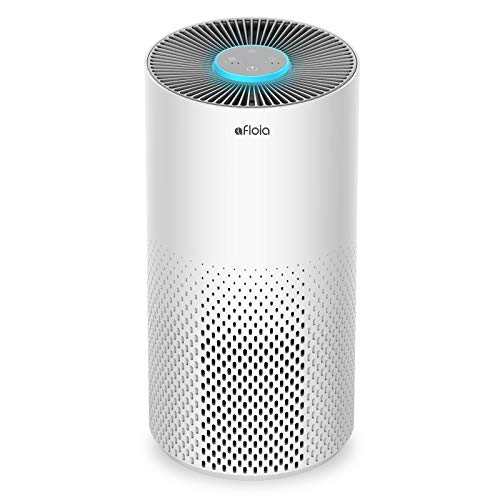
Afloia Air Purifier for Home Bedroom Large Room up to 1500 Sq Ft
- washable pre-filter
$59.97 Check pricePrices change often



Common questions
What is the best air purifier under $100?
The MOOKA H13 ($46.98) is the strongest pick: true HEPA with carbon filtration, rated to 1,300 sq ft, and its $17.98 replacement filter gives it the lowest five-year cost of ownership among true HEPA purifiers under $100 in this catalog, beating every other unit on both ends of the cost equation.
Is a cheap air purifier actually true HEPA?
Many are. Three of the four picks in this roundup, from $46.98 to $99.99, state true HEPA on their listings, which means the 99.97 percent at 0.3 micron specification. The DREO in the intermediate tier states HEPA sleep mode instead, which is a weaker claim. Price under $100 more often affects coverage area and extra features than the filtration standard itself, which stays fixed regardless of price.
How do I calculate the real five-year cost of a cheap air purifier?
Add the unit price to the replacement filter price multiplied by a realistic number of changes over five years, typically one to two per year depending on use. A cheaper unit with an expensive filter can end up costing more over time than a slightly pricier one with a cheap filter.
Do cheap air purifiers under $100 have activated carbon for odor?
Some do and some do not; check each listing individually rather than assuming. In this roundup, the DREO, MOOKA, and GermGuardian picks include carbon for odor, while the Clorox Small Room pick is true HEPA only, with no carbon stage for cooking or pet smells, which matters if odor is the main concern.
Is it worth spending closer to $100 instead of $50 under this budget?
It depends on coverage needed and features wanted. The GermGuardian AC4825 at $99.99 covers more square footage and adds a switchable UV-C mode compared to a $46.98 unit, but its five-year total cost is actually higher despite a similarly cheap filter, since the unit price itself sits at the top of the bracket.
Can a purifier under $100 handle a whole bedroom?
Yes, several of these picks are rated for a full bedroom, not just a desk. The GermGuardian AC4825 at 153 sq ft and the MOOKA H13 at 1,300 sq ft both comfortably cover a standard bedroom, though the MOOKA's large rated maximum assumes a lower air change rate at that top figure.