Best air purifier for a whole house
Quick answer
No portable air purifier cleans a whole house; a portable unit cleans the room it sits in. The honest whole-home fix is either a MERV 13 furnace filter, like the Filtrete 20x25x1 ($36.99), upgraded inside your existing ducted HVAC system, or one portable purifier per commonly used room, budgeted around $180 to $350 apiece for large-room coverage.
Whole-home coverage from a single portable machine is not a real product category; it is a marketing claim that does not match how air actually moves through a house with closed doors.
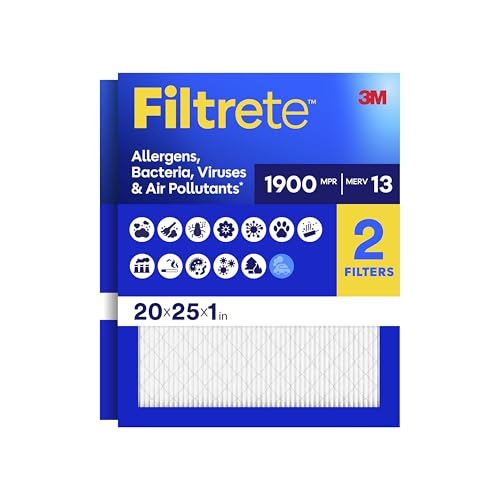
Filtrete 20x25x1 Air Filter, MERV 13, MPR 1900, 2 HVAC Filters
It is a MERV 13 furnace filter rated at MPR 1900, meaning it captures a meaningfully higher share of fine particles than a standard MERV 8 filter every time your existing HVAC system circulates air through the whole house, without adding any new hardware to buy or maintain.
Coverage claims vary in what air change rate they assume, so check a machine's published airflow against your own room rather than the room size on the box.
The three tiers
Beginner: Best whole-home fix with no new hardware
Who it is for: anyone with a working central HVAC system who wants a whole-house improvement without buying a portable machine at all
- Beginner pick
Filtrete 20x25x1 Air Filter, MERV 13, MPR 1900, 2 HVAC Filters
- app or voice
$36.99 Check pricePrices change often
The Filtrete 20x25x1 MERV 13 filter ($36.99) swaps into an existing furnace or air handler and filters air throughout the ducted system every time it runs, which a portable machine in one room cannot do.
Not for: a home without central ducted HVAC, or a system whose blower cannot handle a dense MERV 13 filter without extra strain
Intermediate: Best room-by-room starting point
Who it is for: a household starting with the two or three most-used rooms rather than furnishing every room at once
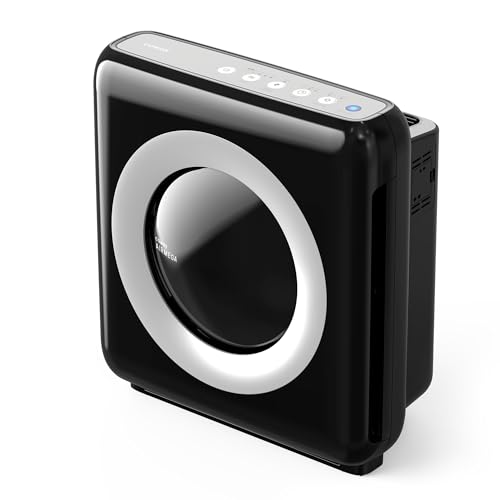
The Coway AP-1512HH ($218.50) states coverage of 1,748 sq ft at its own assumed air change rate, a reasonable per-room unit to place in a living room or a primary bedroom as the first purchase in a room-by-room plan.
Not for: anyone expecting one unit to cover more than the single room it sits in
Expert: Best for a full multi-room build-out
Who it is for: a household committing to one large-capacity unit per major room across the whole house
- Expert pick
BLUEAIR Air Purifiers for Home Large Room up to 3,235 Ft2, Blue 211i Max
- particle sensor
$349.00 Check pricePrices change often
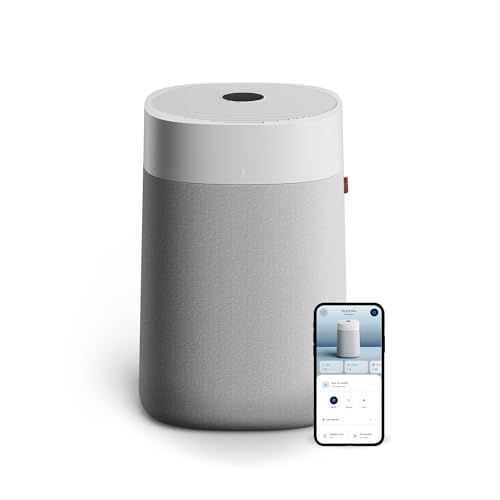
The Blueair Blue 211i Max ($349.00) is rated to 3,235 sq ft per unit, the largest single-room capacity in this catalog, and buying one per major room, paired with a MERV 13 furnace filter for the rest of the house, is the closest a household can get to genuine whole-home coverage.
Not for: a tight budget, since furnishing multiple rooms at this price point adds up fast
| Approach | What it actually covers | What it costs to start |
|---|---|---|
| MERV 13 furnace filter swap | every room the ducted system reaches, filtered whenever the blower runs | $36.99 per filter change |
| One portable unit per room | only the specific room each unit sits in | $180 to $350 per room |
| Both together | ducted background filtration plus stronger coverage in the most-used rooms | filter cost plus one or more portable units |
Why "whole house air purifier" is not a real product
A portable air purifier moves air through its own intake and filter and pushes it back out into the room it physically sits in; it has no way to pull air from a closed bedroom down the hall or a basement behind a door. Any listing implying a single portable unit covers an entire multi-room house is describing a best-case open floor plan, not a typical home with interior doors.
The two genuinely whole-home approaches work through different mechanisms entirely: a ducted HVAC system that already moves air through every connected room, or enough individual portable units placed one per room to add up to full coverage.
Approach one: upgrade the filter already in your ducted system
If a home has central HVAC, whatever filter sits in the furnace or air handler already filters air every time the system runs, whether that air is heating, cooling, or just circulating on a fan-only setting. Upgrading that filter to MERV 13 under the ASHRAE 52.2 standard, from whatever lower rating is currently installed, raises the share of fine particles captured on every single pass through the system.
Running the system fan on a scheduled "on" setting rather than only when heating or cooling is active meaningfully increases how many times air actually passes through that filter per day, which matters more for whole-home particle reduction than the specific MERV number alone.
Not every HVAC system can take a MERV 13 filter
A denser filter restricts more airflow, and some older or smaller blower motors are not sized to pull air through a MERV 13 filter without added strain, which can shorten equipment life or reduce heating and cooling performance. Check the system's manual or ask an HVAC technician before upgrading past what the equipment was designed for; a MERV 11 filter is a meaningful step up from a basic MERV 8 with less risk to an undersized blower.
A one-inch filter slot, common in older systems, is more restrictive than a four-inch media cabinet at the same MERV rating, since the thinner filter has less surface area to pull air through. If the system has room for a four-inch filter, that format reaches MERV 13 with less airflow resistance than a thin one-inch equivalent.
Approach two: one portable unit per room
Where central HVAC is not an option, whether renting, no ducted system exists, or ducts are not accessible, the honest fix is placing one adequately sized portable purifier in each room used regularly: living room, primary bedroom, and any home office or playroom. Each unit needs to be sized to that specific room using the same arithmetic as any single-room purchase, floor area times ceiling height times air changes per hour, divided by 60.
This approach scales in cost directly with the number of rooms covered, which is the real reason a "whole house" claim on a single portable unit is misleading; genuine whole-home coverage this way means buying several machines, not one.
Combining both approaches
A furnace filter upgrade and portable units in the most-used rooms are not competing choices; they solve different problems. The ducted filter provides a baseline level of filtration across the entire house whenever the system runs, while a portable unit in a specific room can reach a much higher air change rate in that room than central air alone typically achieves.
A household on a budget can also phase this in: start with the furnace filter upgrade, since it is the lowest one-time cost and improves every room at once, then add a portable unit to the single most-used room, and expand from there as budget allows.
Watch for ozone-generating "whole house" marketing claims
Some products marketed for whole-home odor or air treatment rely on ozone generation or heavy ionization to claim they reach beyond the room they sit in; this site does not recommend ozone generators under any framing, including whole-house marketing language. Where a large-capacity portable unit does include an ionizer or UV mode, the mode can typically be switched off, leaving true HEPA filtration to do the actual particle removal, and California's CARB program regulates and certifies indoor air cleaning devices specifically because of the ozone risk from active technologies.
None of the three tiers recommended above rely on ionizer or ozone-based technology; the furnace filter is a passive media filter with no electrical output of its own, and the two portable picks both rely on true HEPA filtration as their primary mechanism.
How we chose
These recommendations come from published manufacturer specifications for both furnace filters and portable purifiers, and from the physical reality of how ducted HVAC systems and standalone room units actually move air, not from in-person testing of a whole house.
The furnace filter pick was chosen for a widely compatible standard size and a MERV 13 rating under ASHRAE 52.2 without exceeding what most residential blowers can handle. The portable picks were chosen for their per-room capacity and certification where it exists.
Buying tips
Can I skip the furnace filter and just buy more portable units?
You can, but it costs more per room covered and does nothing between the rooms that have units, while the ducted system already reaches every room a portable unit would need to be bought for separately.
How do I know if my HVAC system can handle a MERV 13 filter?
Check the equipment manual for a maximum MERV or pressure drop rating, or ask an HVAC technician to check the blower before upgrading. A system rated only for MERV 8 can struggle with MERV 13 airflow resistance.
Should I run the HVAC fan constantly for whole-house filtration?
Running it on a scheduled "on" setting rather than only during heating or cooling cycles increases how often air passes through the filter, which improves whole-home particle reduction, at the cost of more electricity for the blower motor.
Which rooms should get a portable unit first if I can only afford one or two?
Start with the room used most hours per day, typically the primary bedroom or the main living space, then add units to any room with a specific problem like pet dander, cooking odor, or a home office near a garage.
Other options worth knowing about
- Filterbuy
Filterbuy 20x20x1 Air Filter MERV 8 Dust & Allergy Defense (4-Pack)
$29.96 Check pricePrices change often - Aerostar
Aerostar Air Filter 20x20x1 MERV 8 AC Filter, HVAC, Furnace Filter, 6 Pack
$32.45 Check pricePrices change often


Common questions
Is there actually an air purifier that covers a whole house?
No single portable machine cleans an entire multi-room house; it only filters the air in the room where it physically sits, since it has no way to pull air from a closed room down the hall. Real whole-home coverage comes from a filter upgrade inside an existing ducted HVAC system or from placing one adequately sized portable unit in each room used regularly.
What MERV rating should a whole-house furnace filter be?
MERV 13 under the ASHRAE 52.2 standard is a strong whole-home target for fine particle capture, provided the HVAC blower can handle the added airflow resistance without added strain. MERV 11 is a reasonable step up from a basic MERV 8 filter with less risk to an undersized or older system that was not designed for a denser filter.
How much does a whole-house furnace filter cost compared to a portable purifier?
A MERV 13 furnace filter typically runs $20 to $50 per filter, replaced every one to three months depending on the size and household, versus $180 to $350 per portable unit for large-room coverage plus its own recurring replacement filter cost, per room the household actually wants covered separately by a standalone machine.
Do I need portable purifiers if I already upgraded my furnace filter?
A furnace filter upgrade provides baseline filtration across the whole ducted system, but a portable unit in a specific problem room, such as one with a smoker, pets, or heavy cooking odor, can reach a much higher air change rate in that particular room than central air alone typically delivers on its own.
Can I use a whole-house air purifier if I do not have central HVAC?
Without ducted HVAC, the furnace filter approach is not available at all, and one portable purifier per commonly used room, sized to each room's actual floor area using the standard sizing arithmetic, is the realistic path to broad coverage across a home that has no central air system installed anywhere.
Are whole-house ionizer or ozone systems safe to run?
This site does not recommend ozone generators in any framing, including whole-house marketing claims, since ozone is harmful in occupied spaces regardless of how the product is marketed. California's CARB program regulates and certifies indoor air cleaning devices specifically because of this risk from active or ionizing technologies used in some units.