Five year cost of owning the Winix unit
Quick answer
With the machine under $100 and a replacement filter under $50, five years of ownership comes to under $200 if the filter is changed every 12 months, and puts 53 percent of the total into filters rather than into the machine. Changing every six months instead takes the five year total to under $300.
The listing states a 12 month replacement interval, so that is the interval used for the headline figure.
| Interval | Filters bought | Spent on filters | Five year total | Filter share |
|---|---|---|---|---|
| Every 6 months | 9 | Under $250 | Under $300 | 72 percent |
| Every 9 months | 6 | Under $150 | Under $250 | 63 percent |
| Every 12 months | 4 | Under $100 | Under $200 | 53 percent |

Genuine Winix Filter Q, 1712-0123-00 with Activated Carbon for Odor Control For Winix 5510, 5520 and 5530
Budget: under $100, bought once. The listing does not state the air change rate behind its coverage claim, so it carries no airflow figure that can be compared with a published CADR.
Budget bands are rounded up from the listing; Amazon shows today's price.
The filter this machine actually takes
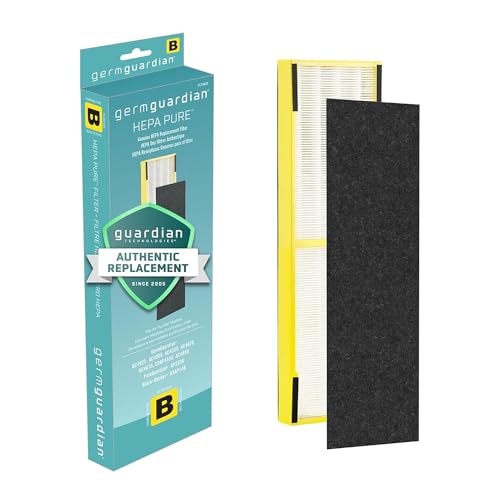
Under $50 each, and the table above is what that adds up to. This is the purchase that repeats, which is why it decides the real cost of the machine rather than the sticker price does.
- Replacement filter
- carbon stage
- has an ionizer
Under $50 Check priceBudget range; Amazon shows today's price - Borgodf
Borgodf B-D02L/M05 Replacement Filter for MOOKA B-D02L & M05 Air Purifier
- HEPA claimed
- carbon stage
Under $50 Check priceBudget range; Amazon shows today's price - Sinnya
12020 11020 HEPA Replacement Filter for Clorox Air Purifier 11020 & 11021
- HEPA claimed
Under $50 Check priceBudget range; Amazon shows today's price - GermGuardian
- HEPA claimed
- carbon stage
Under $50 Check priceBudget range; Amazon shows today's price - Cabiclean
Blue Pure Replacement Filter for Blueair 411, 411+, 411 Auto Air Purifier
- carbon stage
Under $50 Check priceBudget range; Amazon shows today's price - Clorox
Clorox Tabletop Air Purifier True HEPA Replacement Filter, 200 Sq. Ft.
- HEPA claimed
Under $50 Check priceBudget range; Amazon shows today's price




Why the filter cost is the real number
Winix sells the machine at under $100, which is the number on the shelf edge and the one people compare. Over five years at a 12 month interval the filters add under $100, which is 53 percent of the total cost of owning it. A machine that is fifty dollars cheaper with a filter that is twenty dollars dearer is not cheaper, it is more expensive by the second year.
That is the whole argument for looking up the filter price before buying the machine rather than after. Proprietary filters are where the margin lives in this category, and the cheapest machines frequently carry the dearest filters relative to their price.
What is not in this total
Power. A purifier running continuously at fifty watts uses about 438 kilowatt hours a year, which at fifteen cents a unit is roughly sixty five dollars a year, or a third of the machine price again over five years. Running a larger machine at a lower speed is usually cheaper than running a small one flat out, because fan power rises steeply with speed.
Also missing: the pre-filter, which costs nothing if it is washable and is what keeps the interval above at the long end rather than the short one.
Common questions
How much does this purifier really cost?
The machine is under $100, and over five years the filters add under $100 at a 12 month interval, for a total of under $200. Power is on top of that, and a machine drawing fifty watts continuously adds roughly sixty five dollars a year at fifteen cents a kilowatt hour.
Does the replacement interval really change the answer?
Substantially. Over five years this machine comes to under $200 at a twelve month interval and under $300 at six months, because the number of filters bought roughly doubles. Interval is set by how dirty the air is as much as by the calendar, so a house with pets or a smoke season will sit at the shorter end.
Can I use a cheaper third party filter?
Sometimes, and the risk is the seal rather than the media. Air takes the easiest path, so a filter that does not seat properly in the housing lets air bypass the media entirely and the machine quietly stops filtering while still making noise. If you use one, look at how it sits in the machine rather than at the percentage printed on the box.
Is a washable pre-filter worth anything?
Yes, and it is the single cheapest way to extend the interval above. The pre-filter catches hair and coarse dust that would otherwise load the pleated stage, and washing it every few weeks is free. It does not replace the main filter, and no pleated HEPA filter can be washed and put back.
What does this machine deliver for the money?
The listing states a coverage area but not the air change rate behind it, so there is no airflow figure here that can honestly be compared with another machine. Look for a published CADR before comparing this against a machine that publishes one.