Which air purifiers emit ozone: ionizers, plasma, ozone generators, and UV-C
Quick answer
Mechanical HEPA and activated carbon filters do not emit ozone. Ozone generators deliberately produce ozone and are harmful in occupied rooms. Ionizers, plasma, and some UV-C lamps may emit ozone as a by-product. California CARB certifies devices and maintains a list of compliant models.

Frida Baby 3-in-1 Air Purifier, Sound Machine + Nightlight, Auto-Off Timer
A machine that publishes a real airflow figure, so the arithmetic on this page can actually be applied to it.
Coverage claims vary in what air change rate they assume, so check a published airflow figure against your own room rather than the room size on the box.
| Technology | Ozone emission | Safe for occupied rooms | Notes |
|---|---|---|---|
| Mechanical HEPA filter | None | Yes | Traps particles; no chemical byproducts |
| Activated carbon filter | None | Yes | Absorbs gases; no byproducts |
| Combined HEPA + carbon | None | Yes | Standard purifier configuration |
| Ozone generator | Yes, by design | No | Intentionally produces ozone; banned in California for residential use |
| Ionizer | Possible byproduct | Limited | May emit trace ozone; can be harmful at high levels |
| Plasma (DBD, corona) | Possible byproduct | Limited | May emit ozone depending on design; check specifications |
| UV-C lamp (mercury) | Possible byproduct | Limited | Some mercury lamps produce ozone; certified models available |
| UV-C lamp (excimer) | None | Yes | Excimer lamps at 222 nm do not produce ozone |
What is ozone and why it harms lungs
Ozone (O3) is a molecule made of three oxygen atoms. It is created naturally in the upper atmosphere by ultraviolet light. At ground level, ozone is a pollutant that irritates the respiratory system.
Ozone reacts with lung tissue, causing inflammation, reduced lung function, and increased susceptibility to respiratory infections. People with asthma, allergies, or heart disease are at highest risk. Even in healthy people, ozone exposure increases cough and shortness of breath.
The EPA has set safe limits: 70 parts per billion (ppb) averaged over 8 hours is the standard for outdoor air. Indoors, where ozone is not diluted by outdoor air, the concentration can climb to 100 ppb or higher in minutes if a device is running. This is a known health risk that air purifier manufacturers avoid mentioning.
Ozone generators: intentional production and harm
Ozone generators deliberately produce ozone and are marketed with pseudoscientific claims: "kills bacteria", "neutralizes odors", "purifies air". The ozone does neutralize some molecules and kill some microbes, but the cost is respiratory damage to anyone in the room.
California, the most populous US state, classifies ozone generators as pollutant sources and banned them for residential use under CARB regulations. Some states followed suit. However, they are still sold online and in big-box stores, often with misleading marketing.
Never buy an ozone generator for use while you are home. If you must use one, evacuate the building during operation and ventilate well before returning.
Ionizers: intended benefit, uncertain ozone risk
An ionizer applies an electrical charge to particles, making them stick to nearby surfaces or each other. The idea is that charged particles are easier to remove.
Some ionizers emit ozone as a byproduct of the ionization process, while others do not. The risk depends on design, voltage, and airflow. Many manufacturers do not disclose ozone levels.
If you own a purifier with an ionizer feature, check the specifications or ask the manufacturer: does this model produce measurable ozone? If the answer is unclear or if the manufacturer lists ozone output, consider turning off the ionizer and running the HEPA filter alone.
Plasma and corona discharge technologies
Plasma purifiers use electrical discharge to ionize air and create reactive species that damage microbes and break down pollutants.
Some plasma designs (dielectric barrier discharge, or DBD) emit ozone as a byproduct. Others do not. Like ionizers, the risk varies by manufacturer and design.
If you have a plasma purifier, check for ozone output in the specifications. Some CARB-certified models keep ozone emissions below 10 ppb. Uncertified models may not have been tested.
UV-C light and ozone emission
UV-C light kills bacteria and viruses by damaging their DNA. There are two main types: mercury lamps (254 nm wavelength) and excimer lamps (222 nm wavelength).
Mercury lamps at 254 nm can produce ozone as a byproduct when they run. The amount depends on the lamp design and surrounding materials. Some purifiers with UV-C include an ozone filter to absorb any ozone produced.
Excimer lamps at 222 nm do not produce ozone, making them a safer choice if your concern is ozone. However, excimer lamps are newer and more expensive than mercury lamps.
If your purifier has UV-C, check the specifications: does it mention ozone output or an ozone-absorbing filter? If not, it may be producing ozone that you cannot see or smell.
CARB certification and ozone limits in California
California CARB (Air Resources Board) regulates indoor air cleaning devices and maintains a list of certified models that meet strict ozone limits: 10 ppb or lower in California, with some models at even lower levels.
If you live in California, look for a CARB-certified model: it has been tested and verified to emit less ozone. If you live elsewhere, CARB certification is still a sign of environmental responsibility, but it is not a legal requirement.
The CARB certified list is publicly available at arb.ca.gov. You can search by product name or manufacturer to see if a model is certified.
Identifying ozone-safe purifiers
The simplest way to avoid ozone is to choose a purifier with only mechanical HEPA and activated carbon filters. These technologies produce no ozone.
Look at the specifications: if the purifier mentions "ionizer", "plasma", "active oxygen", "ozone", or "UV-C", it may emit ozone. Ask the manufacturer for the ozone output in ppb or look for CARB certification.
Do not trust marketing language like "safe", "eco-friendly", or "natural" on a device with ionizer or plasma technology. The term "active oxygen" is a marketing name for ozone.
Equipment mentioned on this page
- GoveeLife
GoveeLife Smart Air Quality Monitor with PM2.5 H5106, LED Display Wired
- app or voice
$45.99 Check pricePrices change often - Clorox
Clorox Small Room Air Purifiers for Bedroom Home, True HEPA Filter
- HEPA claimed
$59.95 Check pricePrices change often - Afloia
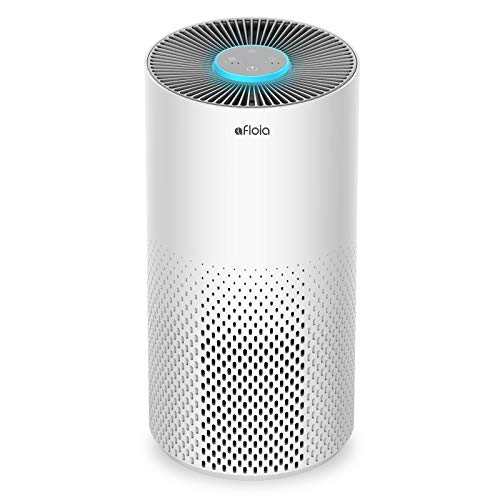
Afloia Air Purifier for Home Bedroom Large Room up to 1500 Sq Ft
- washable pre-filter
$59.97 Check pricePrices change often - Afloia
Afloia Air Purifier for Home Bedroom Large Room up to 1076 Sq Ft
$69.98 Check pricePrices change often




Worth knowing before you buy
Common questions
Can I turn off the ionizer on my purifier to avoid ozone?
Yes. Most purifiers with ionizers allow you to disable the feature. Keep only the HEPA and carbon filters running. The HEPA filter alone will purify the air without any ozone risk.
Are all UV-C purifiers producing ozone?
No. Mercury lamps at 254 nm may produce ozone; excimer lamps at 222 nm do not. Check your purifier specifications to see which type you have. If the specs do not say, ask the manufacturer.
How do I check if my purifier is CARB certified?
Visit arb.ca.gov and search the certified indoor air cleaning devices list. Enter your purifier model number. If it is on the list, it has been tested and meets California ozone limits. If it is not listed, the manufacturer did not submit it for testing.
Can I smell ozone if it is being produced?
Sometimes, but not reliably. Ozone has a sharp smell (similar to bleach) that some people detect at 10 to 20 ppb, but others cannot smell it until concentrations reach 50 ppb or higher. Never rely on smell to detect ozone.
What does "active oxygen" mean on a product label?
Active oxygen is a marketing term for ozone. If a product claims to use "active oxygen", it is deliberately producing ozone. The term is used to avoid the stigma of ozone, but it is the same gas and carries the same health risks.